Synthesize

As a former keyboard player on the church worship team during high school, the word synthesize brings to mind synthesizer, a collection of various electronic sounds possible at the touch of my fingertips on the Roland instrument. Anything from a jazz organ to a grand piano to an ethereal soundscape, my hands were busy on Sunday mornings as I filled the spaces of people’s auditory experience with chords that would accompany their singing of praise songs in the worship service. Together with my fellow musicians, we created something powerful, something beautiful.

Now the word takes on a different tone for me, having just completed an academic course on entrepreneurial mindset, but it might as well have been a course on how to think critically. The professor had laid out clear guidelines on how to engage in the discussion boards: build on each other’s posts to further the discussion, reference the texts you read, don’t just summarize but synthesize the ideas. This exercise in engaging thoughtfully with my classmates (along with specific feedback from the professor on how to improve discussion techniques) led to a rich educational experience in not just how to have productive discussions, but how to think better. How does the text tie in with the points the discussant is making? How does that build on the concepts we learned last week? What additional questions does this bring up? It almost didn’t matter what the discussion topic was about, because the skillset we were cultivating was one we could carry into everyday life.

Like a synthesizer keyboard that helps the band blend to create beautiful music, so the ability to synthesize ideas brings people together in harmony. Business coach Jadah Sellner is known to have said, “There are no unique messages, only unique messengers.” And yet it’s the uniqueness of those messengers that allow the important messages of life to land for those who receive them. A musical scale has a finite number of pitches, and yet there are countless songs that have been written using those same pitches over and over again in unique ways. There are a finite number of musical instruments, but the auditory textures those instruments bring, both individually and collectively, create countless sound experiences for the listener. Likewise there are common principles, nuggets of wisdom, tropes and archetypes repeated across history, and yet it’s the ability of the messengers to recognize the patterns and communicate those patterns to others that makes it feel as if the receiver is hearing good news for the first time. When we learn how to synthesize ideas, to tie concepts together, to integrate our knowledge and experience with what we learn, we bring a freshness to the patterns around us, making new connections where there were none before.

In a recent conversation about declining literacy rates across the U.S., it was pointed out to me that literacy doesn’t just mean the ability to read words, it’s the ability to comprehend information being conveyed as well as integrate that information to better navigate the world. Integration is how we make connections; the better we understand, the better we communicate and vice versa. If we can make connections between ideas, we can better make connections among people. And this connectedness is what allows humans to flourish; it’s what makes the music of life.

Now that the academic course is over, I find myself craving more discussions, more ways to ideate, to connect, to make that music. I often find solace in the pages of a book, reading the words of people much more knowledgable than I on various subjects. But less often do I discuss what I read with others, applying that knowledge to my own life. It’s as if the creative cycle is truncated sometimes. A book really isn’t complete upon the turning of the final page; a book is complete when you’ve shared the message with another. And many books on my shelves remain incomplete.

So now I ask myself where and what to synthesize next. What ideas are beckoning to be heard? What connections are waiting to be made, if only I would reach out and facilitate them? A Roland keyboard makes no sound unless I’m willing to place my hands on the keys. A book touches no lives if I cannot turn the page. The process takes practice, but so do all good things. Shall we make music together?

Why Wholesome Reading Is Essential to Wellness

Some reflections on the importance and benefits of reading books:

It facilitates a spirit of humility
Picking up a book to read with an open mind says, “I have something to learn from this.” Whether it be light-hearted fiction or dense philosophy, I am broadening my horizons by inviting someone else’s perspective into my consciousness.

It creates a more well-rounded perspective of the world
Reading works written by others helps me see the world in a new light. It takes me out of my bubble and helps me connect with others in ways I wouldn’t have otherwise. Because of this, it helps me to understand why others think differently than I do, and it takes me outside of my own worldview to discover that there are many ways of looking at the world.

It keeps the brain young
The development of any skill takes practice, and critical thinking is no exception. The more I exercise my brain through reading, the better and longer it continues to function even as I age. To say I have already learned all I can from life would be closing the door to growth and enrichment.

That said, here are a few books I have read this year:

The Body Keeps the Score – Bessel Van Der Kolk

Brilliant read, though a little overwhelming due to memories of trauma in my own life it brings up. Van der Kolk is one of the leading researchers who has helped make psychology what it is today, and reading about his work is fascinating.

Trauma-Sensitive Yoga in Therapy – David Emerson

Easy to understand approach to addressing complex trauma and its effects on the body. A quick read but very helpful for both self body awareness as well as helping others with their body awareness.

Honoring the Body – Stephanie Paulsell

A beautiful read that gives a spiritual perspective of the human body.

I also have to say I’m a fan of the GoodReads app, which helps me keep track of books I’ve read and books I want to read – you should check it out! Happy reading 🙂

15 Books Women Should Read

I came across a list entitled “25 Books Every Girl Should Read Before She Turns 25.” I am now rushing to read them all because my birthday is in just a few weeks. Upon looking over the list, I realized a lot of the books are novels. I have nothing against novels; in fact, I should probably read more. However, I’m going through a stage now where nonfiction is more interesting to me. Because a person’s twenties are such a crucial decade to one’s development and growth, I find it important to read material that aides in that.

As such, I have decided to make a list of books I have read that have been helpful in my journey of self-discovery (yes, some of them are even novels). They may not be for everyone, as they are specific to my needs and beliefs, but perhaps you will find one or two that are helpful to you. Feel free to add more suggestions in the comments below.

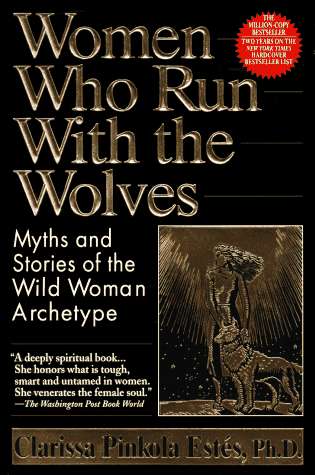
  1. Women Who Run With the Wolves by Clarissa Pinkola Estes
    women_who_run_w-330

    If you’re not big into reading, don’t start with this one. It’s amazing, but it also took me months to read. But it’s worth it! It explains the wisdom of ancient tales and the lessons we can learn from them. It travels deep into the female psyche, teaching women to unlock their inner wisdom.
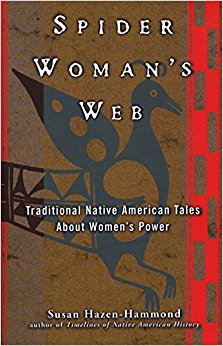
  2. Spider Woman’s Web by Susan Hazen-Hammond
    51pkfufrkjl-_sy344_bo1204203200_

    I think of this one as almost a simpler version of Women Who Run With the Wolves. A swift read, but a meaningful one. It also explores old tales, but specifically focusing on those of Native American tradition. At the end of each chapter are questions beckoning readers to dig deep within themselves, exploring their past and embracing their present.
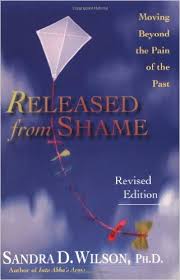
  3. Released from Shame by Sandra D. Wilson
    unknown

    This is a fantastic book for anyone struggling with relentless shame, low self-worth, doubt, etc. Even if this doesn’t describe you, it opens a window of understanding toward those it does describe. Again, it challenges the reader to look inward for growth and self-awareness.
  4. Will I Ever Be Good Enough? by Karyl McBride
    unknown

    Think of this book as a very specific version of Released from Shame. It peers into rocky relationships between mothers and daughters, and it reveals how influential the mother-daughter relationship is in women’s lives. Even if you have/had a great relationship with your mother, this can be helpful in accessing your own inner mother to yourself as well as growing as a mother to your children.
  5. The Vagina Monologues by Eve Ensler
    unknown

    Some people love it, some people don’t. But it certainly does offer interesting perspectives on the female genitalia.
  6. Emotionally Healthy Spirituality by Peter Scazzero
    unknown-1

    The author emphasizes the importance of not sacrificing that which is good and healthy in the name of being “spiritual.” It is written from a Christian perspective, but the points made are excellent for those of any spiritual background. Emotional health is an important thing, and good spirituality should enhance that, not sabotage it.
  7. The Absolutely True Diary of a Part Time Indian by Sherman Alexie
    unknown

    A novel about a young, Native American man and his journey of transferring schools and the experiences that come with it. I have almost no grounds to relate to this character, but the author did a fantastic job of placing me in the character’s shoes to understand his thoughts and feelings. It also gave me a clearer perspective of  modern Native American culture.
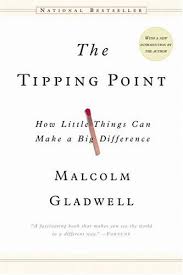
  8. The Tipping Point by Malcolm Gladwell
    unknown

    I was required to read this book for a writing class I took, but I learned a lot about societal trends and how little things can become epidemics. An example that immediately comes to mind is how Justin Bieber became so popular almost overnight. Gladwell doesn’t specifically mention Justin Bieber, but that’s kinda of the idea of what he talks about.
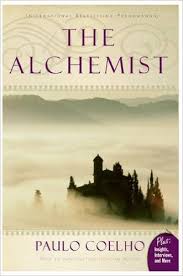
  9. The Alchemist by Paulo Coelho
    unknown-1

    A coming of age novel about a young man following his dream. I normally hate the idea of “following your dreams,” (a topic for a different post), but I’d say this story is far from cheesy.
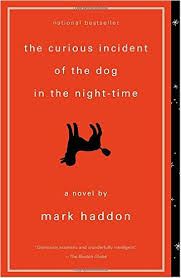
  10. The Curious Incident of the Dog in the Nighttime by Mark Haddon
    unknown

    A novel I couldn’t put down, giving me the perspective of one whose life is very different from mine, and also increasing my empathy and understanding for others.
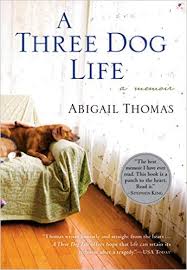
  11. A Three Dog Life by Abigail Thomas
    unknown

    Written by a woman whose husband was forever changed by a terrible accident, A Three Dog Life chronicles her journey of creating a new normal. My comments cannot do this books justice. But I will say that it was enriching for me to read because it helped me step outside my personal bubble to learn about someone who is in a different stage of life from me.
  12. The Things They Carried by Tim O’Brien
    Unknown.jpeg

    I found an deepening of two things as a result of having reading this book: my understanding of those involved in/affected by the Vietnam War, and my respect for said people.
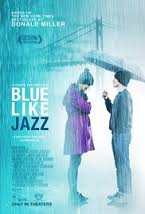
  13. Blue Like Jazz by Donald Miller
    Unknown.jpeg

    The subtitle of this book is “Nonreligious Thoughts on Christian Spirituality.” Written by a former atheist, the author is not trying to shove an ideology down your throat. He’s simply writing about his experience, which I loved reading about. Great for those exploring their own spirituality.
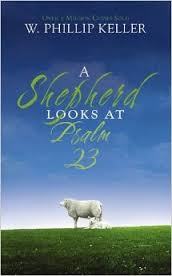
  14. A Shepherd Looks at Psalm 23 by W. Phillip Keller
    Unknown.jpeg

    Psalm 23 is a commonly quoted poem at funerals, but that wasn’t necessarily what the original author had in mind when he wrote it. This book is written by a shepherd who knows the ins and outs of the daily life of sheep, and it will increase your appreciation for the shepherd’s psalm.
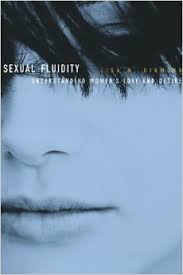
  15. Sexual Fluidity by Lisa Diamond
    Unknown.jpeg
    I don’t have a lot of well-developed thoughts on this book because I’m still reading it. However, I am learning more about female sexuality, and it’s fascinating.

Creating an Ideal Day

I often think of things I wish I could accomplish in a given day if I could only muster the motivation to do them. Sometimes they are even things I enjoy doing but haven’t developed the discipline for turning them into regular habits. Therefore, I have decided to list tasks I would love to accomplish in my ideal day:

  • Write in my blog/practice writing in general
  • Read 50 pages or so in any given book
  • Devote time to a yoga practice
  • Practice harp/work on reading music
  • Draw
  • Work on quilt or some craft project
  • Write to a friend
  • Create (bake) something in the kitchen
  • Practice singing
  • Clean/organize something around the house
  • Devote time to spiritual reflection/reading/prayer
  • Bask in sunshine

Last year I had made a list of goals (resolutions, perhaps) which I did not accomplish in 12 months time, other than reading 15 books and cleaning out my car (for I had to get rid of it). This year I want to focus on furthering my self care routines. Since one of the most common New Year’s resolutions this year is to “become a better person,” which is ridiculously vague, I have decided to create my own goals to strive for and grow into.

My list above is not one I can realistically expect to complete daily; however, it helps to outline my ideal day. Because of this, I have something tangible to work toward in making every day an ideal day, whether I complete the list or not.


2016 Reading Challenge

If you know me well, you know I love to read. That’s why when I found out about the Goodreads app, I was all over it. One of its features is the ability to set annual challenges for yourself to read a certain number of books. While I wouldn’t say I read large amounts at a time, I do try to be consistent in taking time to read regularly. This year I resolved to read 15 books. Here is some of what I’ve read so far:

The Opposite of Loneliness: Essays and Stories
A collection of writings by a woman who died young, it was both thought-provoking and entertaining. Since the essays and stories were relatively short, it made for a quick, easy read. Sometimes I would have to pause at the end of a story to process what I had just read, and I pondered with awe how this girl came up with so many creative ideas and put them onto paper so beautifully.

Released from Shame: Moving Beyond the Pain of the Past
I bought this book for under a dollar, and I loved it. Right now I’m going through a phase of being fascinated by nonfiction that focuses on psychology, emotional health, personal growth, etc. This definitely beckons you to face the darkness of your past, or it teaches you how to better relate to those who have had a challenging past. While full of sadness, it also offers hope and healing to weary souls.

Women Who Run with the Wolves
This one took me months to read. I started it sometime last year and didn’t finish it until just a couple months ago. But I mean that in a good way. This was a long, dense, but amazing read. It explores ancient folklore and reveals psychological lessons we can learn from various stories. Written primarily for a female audience, it challenges women to embrace their femininity to the fullest. If you decide to read this book, take your time and savor it. Don’t pressure yourself to rush through it or it may become overwhelming.

Sunny Side Up
I guess this is technically a graphic novel. I haven’t read much in this genre, but I really enjoyed it. I was able to breeze through it in a day, and it provided somewhat of a mental break after the other longer books I had been reading. I actually was able to get a galley free from a library sale. Set in the ’70s, the story follows a girl who travels to Florida for summer vacation. It was seemingly light-hearted at first, but I soon realized  it included a more somber twist. Thought-provoking, yet tender as well.

Dreamtreaders
The first book in the Dreamtreaders’ series, this adventure novel explores the world beyond waking reality. It brings the dream world to life in a way I hadn’t thought about before. This was a great book to read before my bedtime to help me wind down at the end of the day. It was exciting and fun, and I can’t wait to read the next book in the series.

Blue Like Jazz: Nonreligious Thoughts on Christian Spirituality
Spirituality is another subject I love reading about. The author is irreverent but genuine, and he brings up some excellent points and questions about the Christian faith. The book follows his journey between his fundamentalist Christian upbringing and his explorations of less conservative, more “worldly” lifestyles. The author’s relatability and honesty about his doubts makes the Christian faith seem less intimidating. An enjoyable read that made me think.

I have other books that I’m reading or have read, but the above list is a handful of the ones that have really stuck with me. Share in the comments what you’re reading this year!

Book Review: Phantom of the Opera

I have made it a goal to read more classics, both to be more well-rounded and so that I can say I’ve read them. One of the classics I read this summer was Phantom of the Opera.

Before I begin, I will say that this is not the most professional book review. I know what I like to read, and my “review” of a given book will be based on my reading preferences. Therefore, just because I liked a book does not mean it is “good,” neither is a book necessarily “bad” if I disliked it.

That being said, I did initially find POTO a little difficult to read, since it was written over a century ago, making the language style different from what I’m used to. It was not a mindless, easy read for me in the beginning; I had to engage with the text to understand what was going on. Perhaps another reason for this was that the first few chapters read more like a report than a story. After I was several chapters in, however, the author introduced more dialogue and action, which helped to make it more interesting.

Now for the plot. As I’m sure many people know the story already, I will not bore the reader with the details of the narrative. I had already seen the movie (starring Gerard Butler), which made the story easier to follow, since I had an idea of what to expect. Of course the details in the book were different from those of the movie, but the extra scenes and descriptions added a richness to the text that the movie simply does not have. Included in these extras would be the elaborate tunnels and passageways through the opera house (which we only get a glimpse of in the movie), Christine visiting the graveyard, the torture chamber, and the Phantom’s magic tricks. The details and descriptions in the text add a depth that could not possibly be addressed in the movie, yet give the reader a better understanding of the story.

Overall I did enjoy this book, even though it did require a little more mental muscle than I had used in awhile for recreational reading. I would definitely recommend it to someone who is interested in broadening their horizons in literature, but maybe not for the reader who is looking more for something quick and easy.

Things I Love: Books

I love books. Not the ones you get on a Kindle. I mean the real, yellowing-page-worn-spine books. Or even the newer ones that crackle when you open them for the first time. For me, nothing beats the satisfaction of watching the thickness of the remaining pages to be read dwindle, and being able to close the flap for the last time after having finished.

Last summer I read about nine books, so this summer I’ve made a goal to read ten. I recently became more active on my Goodreads account, which I would recommend to people who like to read or want to read more. It’s a great place to organize books you’ve read and books you want to read, as well as see what other people are reading and learn about new books.

So far this spring/summer I’ve read two books: The Guardian by Robbie Cheuvront and Erik Reed, and The Lightning Thief by Rick Riordan. Since I’ve already finished them, I won’t talk much about them here. However, I may talk about books I’m currently reading in future posts. And of course, I would welcome any suggestions for books to read in the future!

Read to Write

I’m taking a writing class in which our primary text is the New Yorker magazine. I had never read it before, and while I do not always keep up with reading every article, I am fascinated by the content. Every week is different; you don’t know what you’ll find. Even if my opinion differs from that of the authors’, I can still find something interesting about the articles I read.

Then it hit me. In recent posts, I’ve mentioned my difficulty for finding inspiration for topics to write about. But when I began reading the New Yorker, I realized that one thing I was missing was the act of reading. Reading engages the brain, broadens one’s knowledge, and offers new perspectives on a given topic. In my excitement to write, I have forgotten to read.

In order to be a good writer, I think it is imperative to learn to be a good reader as well. That’s not to say I need to become the bookworm I was as a child. But if I can exercise my brain more by reading, maybe that will help my mind generate thoughts and opinions that I can translate into writing.

At least, that’s the hope.