
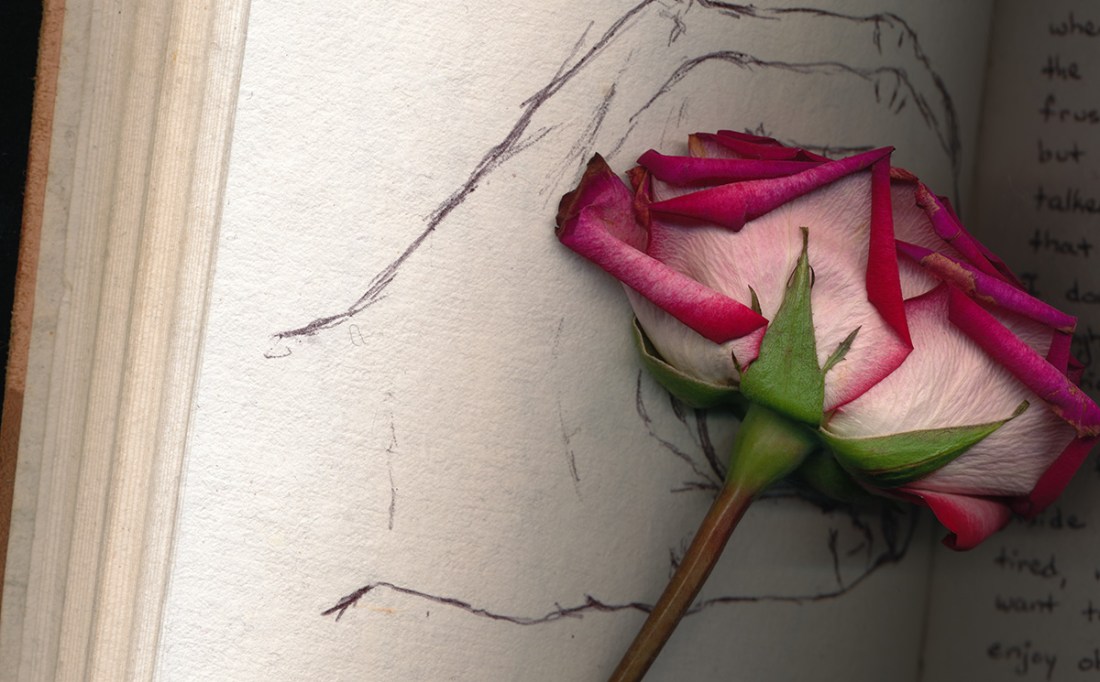
I Yearn for More

The question “How are you?” has morphed into a shallow greeting not meant to elicit an honest response. Those who do wish for an honest response have to probe further to uncover the mysteries that lie beneath the masks. Perhaps the more appropriate question to ask would be “How is your soul?”

If I am honest with myself, my likely answer to that question is “My soul is groaning.” I can tell you what my daily stressors are and why my life is hard, but that barely scratches the surface. Beneath the top soil of my heart lies the tough clay surrounding the root of my struggles, which sometimes not even I can define. Words are not sufficient to describe my feelings, my yearning for something I do not know how to find. And often this translates to depression.

I do not deny that chronic depression is an illness, a chemical imbalance of the brain that should be addressed. It is a battle I have fought for many years. Those who wrestle with depression feel differently from those who do not, even if it entails periods of numbness. There is a depth to the darkness that lasts indefinitely, casting a spell of fog upon those who experience that darkness. One could even argue that those who are depressed feel more deeply in certain ways. But suppose this is not a bad thing? Suppose we looked at depression from a different lens?

What if depression is not merely an illness, but a deeper realization of what it means to groan for eternity? That my soul longs for an unearthly love not yet realized? The material woes and issues of this life are but a thumbnail of a bigger picture which has yet to be revealed. A rocky relationship may propel me to fear that I am not loved and will therefore be alone. A dwindling bank account may scare me into thinking I will not be provided for.

Often we realize and express these anxieties only on the surface level, hoping that if we could just make more money or get along better in a relationship that our problems will be solved. We cling to these tangible issues because they are the some of the only ways we know how to express the deeper feelings of our hearts.

Truthfully, solving the issues on the surface may make life more convenient, but it will not satisfy the underlying ache that permeates the very fibers of my being. To place my hope of fulfillment on my surface saviors is a burden none of them were built to bear.

Many who aware of their deeper feelings have come to this realization, that nothing on this earth can fully meet their most intimate needs. As a result, people have ended their lives as a sign of giving up on this world, longing for a sense of relief and rest. They are right to realize the emptiness of life, but as most therapists will say, suicide is not the answer. What is has been debated over centuries, because this life as we know it is simply too limited for us to completely understand the human spirit. This much is clear: we are meant for something greater; what that entails remains to be discovered.

Exposed Soul

The summer is coming to an end, but it will still be awhile before cooler weather sets in.  I remember last summer feeling like I was seeing a lot of posts about modesty, but this summer I don’t recall seeing as many.

This is not going to be another post on how women should/should not cover up; there are plenty of those on the internet. What this is about is some thoughts I have on clothing from a slightly different perspective.

I wish we could all walk around naked without being judged, but that is not socially or legally acceptable in 2015. But I wonder if our focus should be less on exposed skin and more on an exposed soul.

Let me explain. Any form of exposure requires a degree of vulnerability. Some people are completely comfortable showing skin, while others are more comfortable sharing personal stories or emotional experiences. Some are fine with both or neither. Could the two be related? Could it be that the more skin I expose, the less comfortable I feel revealing my soul? Or is it that the more I cover up, the more insecure I am about how people would react if they knew the true me?

Even in the famous story of Adam and Eve, the two of them walked around naked and were completely vulnerable in all aspects. After the Fall, they covered up, not only physically, but perhaps emotionally as well.

I tend to show more skin than many of my conservative friends may be comfortable with, so I am not going to shun you based on how much or how little you cover up. What interests me more is the core of a human being: who she really is beneath the masks of social constraints.  What are you struggling with that you’re afraid to tell anyone? What are you covering up that is keeping you from being healthy? That is what matters to me.

Theatre and the Internal Battle

Recently I have attended live theatre and loved it. Straight plays especially I am seeing these days contain challenging subject matter that beckons the audience to ask difficult questions. I love it when the art of live theatre serves a purpose in enriching people’s lives. However, recently I have discovered the changes in my taste for entertainment.

As many who know me are aware, I am passionate about emotional and mental health, especially my own. I have spent hours analyzing my emotions, habits, lifestyle, and childhood to determine why I think and feel certain ways, and how to improve those parts of my life that are unhealthy.

How does this affect my tastes for live theatre? I am realizing that the reason many shows are challenging is because the characters are not healthy. It is easy to see the unhealthy decisions of someone on a stage, but it is more difficult to identify those same issues in real life, which is what makes theatre so beautiful. An awareness or a call to attention of a character’s flaws creates a deeper awareness of our own flaws or the flaws of the world. This awareness in turn elicits a response from us, be it a call to action, or at least developing a unique perspective of an area in which one was previously oblivious.

The problem I have is that often I see elements of myself on stage played out in ways that do not allow for a resolution. At the conclusion of a given play, the audience is left to create their own resolution, their own determination to not turn out the way the characters might have. This can be a positive thing, especially if it motivates the audience to live healthier lives. Where I am in my own life, however, seeing dangerous life decisions played out onstage brings me pain because I am trying as hard as I can to avoid a similar fate.

In the midst of my daily anxieties, stressors, and irritants, during which I like to imagine the worst case scenario, I have thought that perhaps one day I will create short dramas to put on a stage to get them out of my head and out of my way in life. I think many people before me have already done that, as we hear stories of artists who lived tortured lives and wrote from dark places. It makes for great drama, because no one wants to watch a story in which everyone is perfectly happy the entire time. My hope is that the events I see onstage will not become a reality in my own life.

And so while I may need to take a break from live dramas to work on my own life, I hope one day I will learn to maintain a certain disconnect from people I watch in stories so as to enjoy them more.

Dear Future Me

I have a confession to make. With several acquaintances knowing me as the “sexually frustrated one,” I have to admit that I get really jealous of people my age and younger who are getting married. Don’t get me wrong; I love them and I’m glad that they found a spouse. But in a culture where it’s common to get married before you’re legally allowed to rent a car, sometimes I wonder if something’s wrong with me.

I let my thoughts run away with me sometimes. I see the beautiful brides and I think, “Why can’t I be in their position now? What do they have that I don’t?”

I can cook, bake, and clean, and I am learning to live within my means. I can sew, weave baskets, spin yarn, play the harp, and countless other things. More importantly, I have been working to better myself by exploring the depths of my emotional weaknesses and learning how to strengthen them. I am very self-aware, and I am perceptive of other’s emotions. I’ve spent hours journaling on why I get so emotional and how to remedy that. I am not perfect, but I’m doing the best I can to become a better person.

Ultimately I know that another person can never satisfy all my needs. First and foremost, I need to learn how to take care of myself, because that’s what being a healthy adult in 21st-century America entails. If I were to seek a romantic relationship now, perhaps it would stunt my growth. But that doesn’t make my loneliness any less frustrating.

So to my future self, I’m sorry that I’m not mature enough right now to relieve that loneliness. But I can’t be sorry for taking care of myself.

Quirky Christendom

Christianity is a weird religion. Traditionally speaking, you meet up with a group of people you don’t know on a Sunday morning, and you listen to someone speak. You sing a few songs, and then you leave. If you’re lucky, you might have a Bible study to go to during the week. But that’s about it. I guess what’s weird to me is that within Christianity, people seem to focus only on their spiritual health and not much else.

I’m thinking in contrast to other religions in which physical health, diet, and relationships are more of the focus. For example, when you think of certain Eastern religions, you may think of yoga, meditation, or certain dietary restrictions. While the main thing that sets Christianity apart from other religions is that it’s not a performance-based religion, sometimes I wonder if  the Christian Church wouldn’t benefit from taking one’s overall well-being into consideration. The beauty of Christianity is that everyone is different, yes, and everyone is in a different point in their journeys. While spiritual health is very important, there are more dimensions of wellness than just spirituality.

You also have physical, emotional, financial, social, and environmental health. When one of these elements suffers, it can affect one’s overall well-being. I’m not saying that the Church should be responsible for everyone’s health in all aspects of life, but I think it would be cool if, when people heard the word “Christian,” they would think, “Oh yeah, Christians are some of the healthiest people I know.”

Then again, you don’t go the a bank in hopes they can help you with a broken arm, and you don’t go to a hospital to get a loan. So I guess these dimensions of wellness should be separate, it just seems strange to me.

I guess what I’m saying is, I want more people in general to care about their overall well-being, because I know how difficult it can be to do that. I’m still learning how to take care of myself in the most basic of ways, and I don’t really have anyone to teach me what a healthy adult is supposed to look like.

These are my thoughts for the day, so thanks for reading my tirade.

One Degree to Rule Them All

Summer 2013

I am neither a bachelor nor a scientist, but eventually I will be considered both, provided that I choose a path of study.

It’s tough for me to choose.

I enjoy a variety of activities. I don’t think I could stay sane if every day were exactly the same as the one before. Sometimes, however, it’s easy to get stuck in the mindset that I’m supposed to go to college to to get one degree and then get one job for the rest of my life. Yuck! (I know that’s not true, of course)

Don’t get me wrong. I love college. What I don’t love is that you can only choose one or two majors at a time, unless of course you intend to stay there for more than four years. If you plan to be in school for more than four years that’s awesome. Maybe I’ll end up doing that. I just wish sometimes that I could major in five different things at once. I would love to be half film major, half music major, half theater major, half physics/astronomy major, half wine-making major, and while I’m at it, half math major (although I clearly need to work on my math skills). I find that I might enjoy taking certain music classes, for example, but I don’t want to take all the classes required for a music major because I’m not interested in all those classes.

I realize that the key is to never stop learning, even after graduation. I don’t think I’ll be getting half a dozen degrees, but I do plan to take classes even after I’m “done” college.

And I suppose it is nice to be able to walk into an interview and say “Having this specific degree shows that I’ve had certain training in this area.” Although at this point I don’t even know where I would go to be interviewed.

That’s the tough part. Indecisiveness. I’m fine with not knowing what the future holds, but it’s frustrating to not be able to decide what to major in, even if I don’t work in that field for the rest of my life.